
In 2022, the Royal Institution of Chartered Surveyors (RICS) introduced a new professional standard for those assessing the risk posed by the presence of Japanese knotweed at a property. Partner and residential property solicitor David Cross takes a look at the advice as well as the outcome of a recent knotweed case.
The Japanese knotweed problem
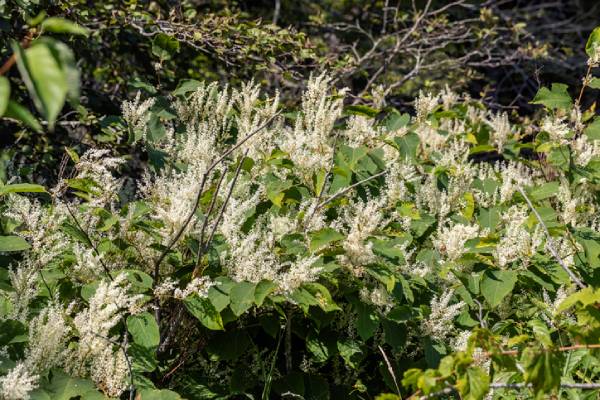
Japanese knotweed is an invasive plant known for being difficult to eradicate. Properties with the plant present have proved difficult to sell and mortgage lenders have refused to lend against affected properties or required guarantee-backed treatment of the problem before agreeing to lend.
RICS issued guidance in 2012 suggesting that if the plant was found growing within seven metres of the boundary of a property, a mortgage would not usually be offered.
The latest RICS guidance
In 2022, the RICS reconsidered this guidance, following a report carried out by the Science and Technology Committee which found that the above guidance was over-cautious.
The RICS now says that ‘research has demonstrated, and it is now generally accepted, that Japanese knotweed poses little or no risk of structural damage to robust buildings with substantial foundations such as dwellings, as opposed to less sturdy structures with shallow foundations, such as conservatories, garages, or boundary walls.’
The new RICS standard is to replace the seven-metre rule with an assessment of the impact of the plan at a property. Surveyors are advised to rate the presence of Japanese knotweed at or near a property in one of four categories, as follows:
Management Category A: Action
Japanese knotweed is present and is causing visible material damage to a significant structure. Remedial action and repairs will be necessary and this is likely to affect the value of the property.
Management Category B: Action
There is no material damage to structures but the plant is likely to prevent the use of an amenity space or restrict access to it. The value of the property could be affected because of the need for remedial action.
Management Category C: Manage
Japanese knotweed is present but is not causing damage or affecting the use of the land. The impact on value will be much lower because of this and the owner will choose whether to take action to remove or contain the plant.
Management Category D: Report
If the plant is only present on an adjacent site, the previous seven-metre rule is replaced by three metres, meaning where Japanese knotweed is three metres or nearer to the boundary of the property to be purchased it should be reported to lenders.
Lenders are likely to require action to be taken in categories A and B to deal with the plant. If the plant is present at all, buyers are advised to have quotes carried out for guarantee-backed removal of the plant.
Contact our residential property solicitors in Westminster, London
David Cross is a partner in the Residential Property department. He deals with a full range of property transactions, including complex and high-value purchases. If you would like to speak to David or one of his team, call 020 7873 1000, email law@williamsturges.co.uk or fill in our contact form below.