
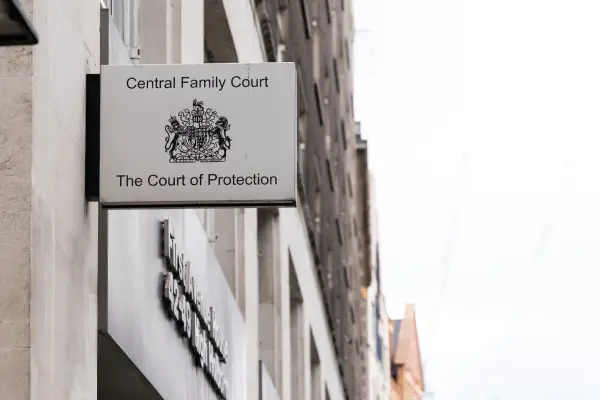
Transparency is expected from all parties, experts and representatives involved in family court cases. So, why then has the topic of transparency in the family courts garnered much attention over the last two decades? Well, put simply, hearings in the family courts have historical-ly been shielded from public scrutiny, and this has often been viewed by the public with disdain.
In July 2009, then-Justice Secretary Jack Straw announced plans to ease the reporting restrictions in family courts following the lifting of the ban on media attendance at hearings. After Labour’s defeat at the 2010 general election, Straw’s plans were halted, kicking the matter of expanding transparency in the family courts into the long grass. What was left was an allowance for media attendance, but strict reporting rules preventing key details of cases from being published.
Campaigns to ‘open up’ the courts have steadily gained traction over the years, amplified by individuals navigating the family court system and successfully winning the right for the journalists to attend their hearings. These cases generate media attention and legal commentary, driven by the fact that family court cases are usually bound tight in reporting restrictions as well as the case involving a matter of public interest. Such attention often serves to highlight the need for greater transparency.
The most recent statistics published for family cases in England and Wales records that 265,617 cases were commenced in a 1-year period (January 2023 to December 2023), a quarter of which related to proceedings under the Children Act 1989. It should therefore be of no surprise that one of the driving forces behind the push for transparency is the concern for child welfare.
The welfare of any minor child is of paramount importance in all family court cases. This prioritisation is enshrined in statute and is often one of the first things a practitioner advises their client of when explaining the law and how it is applied in family cases.
So, how does transparency impact the welfare of children and safeguarding? In January 2024, the Transparency Implementation Group Reporting Pilot was rolled out across England and Wales.
The pilot introduced a presumption in favour of reporting, with accredited journalists able to attend hearings, interview families and report family court cases. The pilot was considered successful and became a permanent development, extending to all family courts across England and Wales on 27 January 2025. Aptly labelled the ‘transparency principle’, Journalists and legal bloggers who wish to report on a case may request a Transparency Order, which stipulates what can and cannot be reported. Journalists are subject to strict rules of anonymity and judges retain discretion to reject requests for a Transparency Order where this is considered necessary; to protect the right to privacy, for example.
In a system that is overstretched and underfunded, Transparency Orders may help call attention to the shortcomings of the court and identify ways to provide better protection for children. Undoubtedly, greater transparency has the indirect effect of giving the courts and local authorities time to pause for thought, aware that the handling of a case can be held up to the light and scrutinised.
President of the Family Division, Sir Andrew McFarlane commented that there is an “absence of confidence” in the family courts. It is hoped that this long-awaited development will assuage concerns and public suspicion regarding the family court’s ‘secret’ decision making.
But what are the downsides? Notably, Judge Haigh, a senior judge in Manchester, voiced concern that public consumption of family court cases may be used by journalists to “further their journalistic ambitions.”
Rightly or wrongly, journalists have a reputation for exaggerating events to gain interest and sell a story. Nobody should underestimate the impact on a family of having their most personal circumstances laid bare to personal scrutiny, criticism, and condemnation through the media both at the time the story breaks, and in the aftermath, which may linger on the internet for many years to come.
Family court cases are emotive and those that have been reported have drummed up much opinion. The introduction of Transparency Orders in the family courts could provide journalists with an abundant source of ‘stories’ to report on. The transparency principle will enable journalists to interview families, who have the loudest opinions on their own cases, and it is natural to wonder what the impact will be on the veracity of the reports.
There remains the need for justice to be seen to be done, and ultimately there is a need for the public to have faith that it is our family courts who are best equipped to do this work.
What is clear is that this shift towards transparency in the family courts is intended to assist the court in better performing its function to protect children and has judicial backing at the highest levels. However, there is a burden now on journalists to ensure that they maintain professional integrity, meaning that their role is not misused, effectively adopting their own transparency principle. Time will tell how this works out, but everyone needs to recognise the family law landscape has changed for good when it comes to transparency in our courts.
Gemma Barnhurst is a family law specialist who offers guidance on various matters, including financial remedy proceedings, divorce, nuptial and cohabitation agreements, domestic abuse injunctions, and various children’s issues. If you have any family law concerns please contact Gemma directly.
Gemma Barnhurst
Solicitor
Family
gemma.barnhurst@williamsturges.co.uk